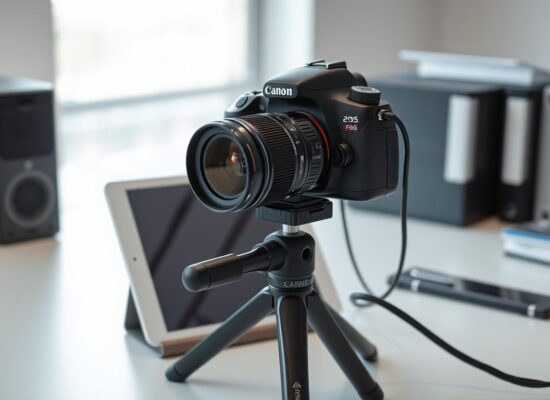
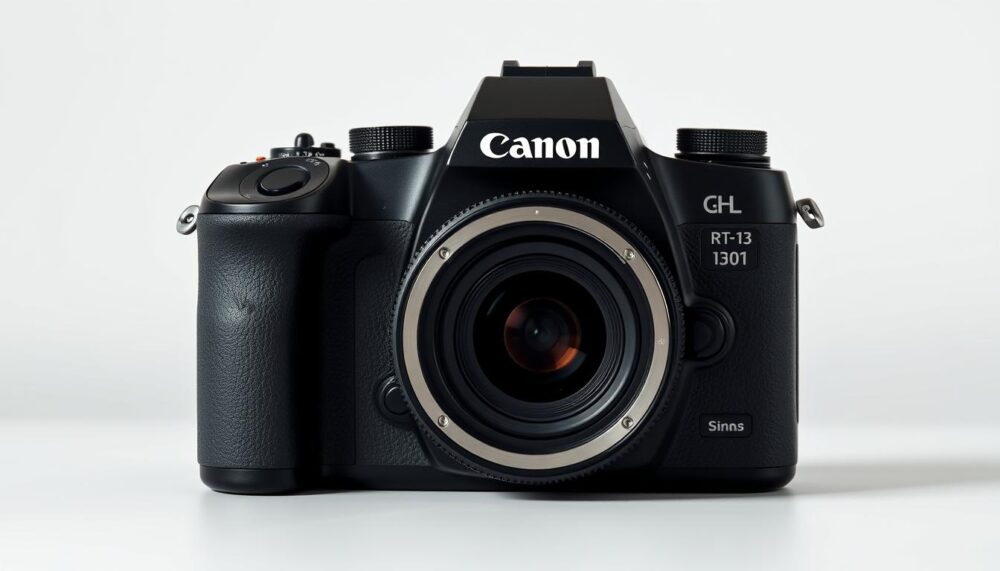
Choosing the right equipment for photography or video can feel overwhelming. With so many options available, it’s essential to find a device that suits your needs and budget. This guide explores the best models from Canon’s 2025 lineup, helping you make an informed decision.
Canon continues to lead the market with its innovative mirrorless systems, while still supporting DSLR users. Whether you’re a beginner or a professional, there’s something for everyone. From the versatile EOS R6 Mark II to the high-performance R5 Mark II, these devices cater to both stills and video enthusiasts.
This guide highlights top performers in photography, video capabilities, and budget-friendly options. We’ll also discuss compatibility with lenses and accessories, ensuring you get the most out of your investment. Let’s dive into the details and find the perfect match for your creative journey.
Key Takeaways
- Explore Canon’s 2025 lineup for photography and video needs.
- Discover top models like the EOS R6 Mark II and R5 Mark II.
- Learn about the transition to mirrorless systems with DSLR compatibility.
- Find tailored recommendations for beginners and professionals.
- Understand the importance of lenses and accessories for optimal performance.
Introduction to Canon Cameras in 2025
Canon’s 2025 lineup offers a wide range of options for every photographer. Since 1937, the brand has been a leader in imaging technology, consistently delivering devices that combine innovation with reliability. Whether you’re shooting stills or videos, there’s something for everyone in this collection.
One of the standout features of Canon’s devices is their ergonomic design. The intuitive menu systems make navigation effortless, even for beginners. Additionally, the Dual Pixel AF systems ensure top-tier autofocus performance, capturing sharp and detailed images every time.
The transition to the RF mount has been a significant step forward. While the RF lens ecosystem is still growing, EF adapters allow users to continue using their legacy lenses. This flexibility ensures that photographers can still achieve exceptional image quality without needing to invest in entirely new equipment.
Recent updates include the R6 Mark II, released in February 2024, which boasts an impressive 40fps shooting speed. The R7, launched in March 2024, is a game-changer for wildlife photography with its advanced tracking capabilities. For those who prefer DSLRs, models like the Rebel T7/2000D remain a solid choice.
Related Posts:



| Model | Key Feature | Release Date |
|---|---|---|
| R6 Mark II | 40fps shooting | February 2024 |
| R7 | Wildlife capabilities | March 2024 |
| Rebel T7/2000D | DSLR support | Ongoing |
Canon makes it easy to find the right device for your needs. With a focus on both mirrorless and DSLR systems, the brand ensures that every photographer, regardless of skill level, can achieve their creative vision.
Which Canon Camera is Best for You?
Finding the perfect device for your photography journey starts with understanding your needs. Whether you’re a beginner or a seasoned professional, the right choice depends on your budget, experience, and primary use cases.
For beginners, ease of use is often a priority. A recent survey by Campkins revealed that 75% of new photographers value simplicity over advanced specs. If you’re just starting, consider models like the R50, which is ideal for vloggers, or the R10, perfect for action shots.
When comparing sensor sizes, full-frame sensors offer superior low-light performance and a wider field of view. APS-C sensors, on the other hand, are more compact and budget-friendly. Here’s a quick comparison:
| Sensor Type | Pros | Cons |
|---|---|---|
| Full-Frame | Better low-light performance, wider field of view | Higher price, larger size |
| APS-C | Compact, affordable | Narrower field of view, less effective in low light |
Deciding between DSLR and mirrorless systems involves weighing factors like weight, battery life, and lens availability. DSLRs remain a viable option for budget-conscious users, while mirrorless systems offer portability and advanced features.
Here are some tailored recommendations:
- R100: Perfect for students, combining affordability with solid performance.
- R8: A lightweight option for travel enthusiasts.
- R3: Designed for sports professionals, offering unmatched speed and precision.
Finally, don’t underestimate the importance of handling a device before purchasing. Visit UK retailers like Jessops to test models and ensure they feel right in your hands. For more tips on choosing the right gear, check out this essential checklist.
Top Canon Cameras for Photography in 2025
Photography enthusiasts in 2025 have a lot to look forward to with Canon’s latest releases. Whether you’re capturing weddings, wildlife, or fast-paced action, these models deliver exceptional image quality and performance. Let’s explore the standout options.
Canon EOS R6 Mark II
The R6 Mark II is a powerhouse for event photographers. With a 24.2MP full-frame sensor, it excels in low-light conditions, thanks to its -6.5EV autofocus capability. The 40fps electronic shutter ensures you never miss a moment, making it ideal for weddings and fast-paced environments.
Its 5-axis in-body image stabilisation (IBIS) further enhances image quality, delivering sharp results even in challenging settings. For those who demand reliability and precision, the R6 Mark II is a top contender.
Canon EOS R7
Wildlife photographers will appreciate the R7’s 32.5MP APS-C sensor. The crop factor provides a 500mm equivalent reach, perfect for capturing distant subjects. Its 15fps mechanical shutter ensures you’re ready for any action.
This model was notably used in the 2024 British Wildlife Photography Awards, showcasing its capabilities in real-world scenarios. If wildlife is your passion, the R7 is a game-changer.
Canon EOS R10
For those on a budget, the R10 offers impressive features. Its 24MP APS-C sensor and 15fps tracking make it a solid choice for sports and action photography. The subject detection technology, borrowed from the R3, ensures accurate focus even in dynamic scenes.
While its buffer depth of 30 RAW files is smaller compared to the R6 Mark II’s 140, it remains a versatile and affordable option for enthusiasts. For more insights, check out this detailed comparison.
Best Canon Cameras for Video in 2025
For videographers, 2025 brings exciting advancements in Canon’s lineup. Whether you’re filming documentaries, short films, or vlogs, the latest models offer cutting-edge features tailored for video production. Let’s explore the standout options.
Canon EOS R5 Mark II
The R5 Mark II is a powerhouse for professional videographers. It supports internal 8K60 RAW recording, making it a top choice for high-end productions. Its autofocus performance ensures sharp focus, even in fast-paced scenes.
Netflix has approved this model for its productions, thanks to its active cooling solution. This prevents overheating during long shoots, a common issue with high-resolution recording. The C-Log3 profile offers over 12 stops of dynamic range, perfect for colour grading in post-production.
Canon EOS R8
The R8 is a lightweight alternative for filmmakers on the go. It records 4K60 video oversampled from 6K, delivering crisp and detailed footage. Its compact body makes it ideal for handheld shooting, though it has a 2-hour recording limit in 4K.
Like the R5 Mark II, it supports C-Log3, ensuring flexibility in post-production. The R8 is a great option for indie filmmakers or those looking for a portable cine alternative.
Here’s a quick comparison of the codecs supported by these models:
| Model | Codecs | Best Use Case |
|---|---|---|
| R5 Mark II | H.265, ProRes RAW | High-end productions |
| R8 | H.265 | Indie films, vlogging |
The BBC Earth crew recently used the R5 Mark II for handheld nature shots, showcasing its versatility in real-world scenarios. For external recording, consider pairing these models with the Atomos Ninja V+ to unlock even more creative possibilities.
Budget-Friendly Canon Cameras in 2025
For those looking to step into photography without breaking the bank, Canon’s 2025 lineup offers excellent budget-friendly options. Whether you’re a beginner or simply want a reliable secondary device, these models combine affordability with solid performance.
Canon EOS R50
The Canon EOS R50 is a standout choice for beginners. Priced at £679 for the body only, it’s a social media powerhouse with vertical video support. Its 4K crop ensures high-quality footage, making it ideal for vloggers and content creators.
This model features intuitive controls, perfect for those new to photography. The HDR PQ creative filter adds versatility, allowing users to experiment with different styles. For portraits, adapting the EF 50mm f/1.8 lens is a cost-effective way to enhance your shots.
Canon EOS Rebel T7/2000D
The EOS Rebel T7/2000D remains a reliable option for those sticking with DSLRs. At £399 with an 18-55mm kit lens, it’s a budget-friendly choice for school photography clubs or hobbyists. Its 1080p video limit is a slight drawback, but it still delivers solid performance for its price.
For even greater savings, consider the used market. Retailers like MPB UK offer the T7 from £229 with a warranty, making it an excellent entry-level option. Its basic creative presets are straightforward, ideal for beginners learning the ropes.
| Model | Price | Key Features |
|---|---|---|
| EOS R50 | £679 (body only) | 4K crop, vertical video, HDR PQ filter |
| EOS Rebel T7/2000D | £399 (kit) | 1080p video, basic presets, DSLR design |
Both models cater to different needs. The R50 is perfect for modern creators, while the T7 remains a steadfast choice for traditionalists. Whichever you choose, these devices ensure you can explore photography without overspending.
Canon vs Other Brands: How Does It Compare?
When comparing leading camera brands, it’s essential to weigh the strengths and weaknesses of each. Canon, Sony, and Nikon dominate the market, each offering unique features tailored to different photography and videography needs. Let’s explore how they stack up in key areas.
Starting with lens ecosystems, Canon’s RF mount is growing rapidly, but Sony’s E mount boasts 32% more native lenses. Nikon’s Z mount, while newer, offers excellent compatibility with older F-mount lenses. This makes Sony a strong contender for those seeking variety, while Canon and Nikon appeal to users prioritising adaptability.
In terms of autofocus, Canon’s Eye Control technology excels in precision, particularly for portrait photography. Sony’s Real-time Tracking, powered by AI, is unmatched for fast-moving subjects. Nikon’s hybrid system combines phase and contrast detection, offering reliable performance in diverse conditions. Each system has its strengths, depending on your shooting style.
For videographers, the choice of video codecs is crucial. Canon’s RAW format provides exceptional flexibility in post-production. Nikon’s N-Log offers a wide dynamic range, while Sony’s S-Cinetone delivers cinematic colours straight out of the camera. Here’s a quick comparison:
| Brand | Codec | Best Use Case |
|---|---|---|
| Canon | RAW | High-end productions |
| Nikon | N-Log | Dynamic range flexibility |
| Sony | S-Cinetone | Cinematic colour grading |
Professional insights also play a role. A 2024 survey revealed that 68% of UK wedding photographers prefer Canon for its colour science and reliability. Sony, however, is favoured by videographers for its advanced autofocus and compact designs. Nikon’s Z9, with its 120fps burst speed, is a favourite among sports photographers.
Finally, hybrid shooting is where Canon’s dual-pixel technology shines. It ensures smooth focus transitions, making it ideal for both stills and video. Sony and Nikon offer similar features, but Canon’s integration often delivers more consistent results. For a deeper dive into the advantages of mirrorless cameras, explore our detailed guide.
Key Features to Look for in a Canon Camera
Understanding key specifications ensures you get the most out of your device. Whether you’re a beginner or a professional, certain features can significantly enhance your shooting experience. Let’s explore what to prioritise when selecting your next device.
The sensor size plays a crucial role in determining image quality. Full-frame sensors capture 2.5 times more light than APS-C, resulting in better low-light performance and smoother bokeh. For example, the R3’s 195fps electronic shutter is perfect for fast-paced action, ensuring you never miss a moment.
In-body image stabilisation (IBIS) is another essential feature. The R6 Mark II offers 8-stop compensation, tested with the 85mm RF lens. This ensures sharp images even in challenging conditions, making it ideal for handheld shooting.
Weather sealing is vital for outdoor photographers. While Canon’s IPX2 rating provides basic protection, it’s worth comparing it to OM System’s IP53 for more demanding environments. Customisable controls also enhance usability, allowing quick access to frequently used settings.
Future-proofing is a key consideration. Features like 8K readiness and PCIe card slots ensure your device remains relevant as technology evolves. The RF 28-70mm f/2 lens outperforms competitors, delivering exceptional resolution and versatility.
By focusing on these features, you can make an informed decision that aligns with your creative goals. Whether you prioritise image quality, performance, or adaptability, understanding these specifications ensures you get the best value for your investment.
Conclusion: Which Canon Camera Should You Buy in 2025?
Deciding on the right tool for your creative needs doesn’t have to be complicated. Whether you’re into photography or video, Canon’s 2025 lineup offers something for everyone. The R5 Mark II is perfect for filmmakers, while the R7 excels in wildlife scenarios. For younger enthusiasts, the R50 is a budget-friendly choice.
When purchasing, compare bundle deals from UK retailers like Wex Photo Video and Jessops. For hands-on experience, book a demo at London Camera Exchange branches. This ensures you’re confident in your choice before committing.
Investing in the RF lens ecosystem is a smart move, with new releases planned through 2026. This guarantees long-term compatibility and results. As Bryan Carnathan wisely said, “Choose the device that inspires daily shooting.”
With the R6 Mark II named TIPA 2024 Best Hybrid Camera and the R50 winning the EISA Budget Award, Canon continues to deliver best canon camera options. Your perfect match is out there—happy shooting!
FAQ
What makes the EOS R50 a great budget-friendly option?
The EOS R50 offers excellent image quality, a compact body, and user-friendly controls, making it ideal for beginners or those on a budget.
Is the EOS R10 suitable for wildlife photography?
Yes, the EOS R10 features fast autofocus performance and a high-resolution sensor, perfect for capturing sharp images of fast-moving subjects like wildlife.
How does the EOS R6 Mark II perform for landscape photography?
With its wide dynamic range and superb image quality, the EOS R6 Mark II delivers stunning results for landscape photography, even in challenging lighting conditions.
Which model is better for video, the EOS R5 Mark II or the EOS R8?
The EOS R5 Mark II excels with its 8K video capabilities and advanced features, while the EOS R8 offers excellent 4K video performance at a more affordable price.
Are Canon cameras good for beginners?
Absolutely. Models like the EOS R50 and Rebel T7/2000D are designed with beginners in mind, offering intuitive controls and helpful features to ease you into photography.
What should I look for when choosing a Canon camera?
Consider factors like sensor size, autofocus performance, resolution, and whether you need a DSLR or mirrorless body. Also, think about your specific needs, such as shooting action, video, or landscapes.
How does Canon compare to other brands in 2025?
Canon continues to lead with its wide range of models, innovative features, and compatibility with high-quality lenses, making it a strong competitor in the photography and video market.